TASS Grounding Framework — Overview
A perceptual-acoustic interaction model exploring how distributed environmental interaction—spanning air conduction, body-bone conduction, and structural coupling—contributes to a listener’s sense of spatial stability and environmental realism.
diversity_2The Multi-Sensory Approach
Grounding within the TASS ecosystem proposes that perception emerges from the combined interaction of multiple acoustic vectors. It is the distinction between mid/high articulation (topography) and low-frequency anchoring (foundation).
- airwaveAir-Conducted Sound:Direct longitudinal waves interacting with the tympanic membrane.
- accessibility_newBody & Bone Conduction:Low-frequency tactile energy transmitted through the skeletal structure.
- architectureEnvironmental Reflections:Spatial coupling that defines the geometry of the perceived volume.
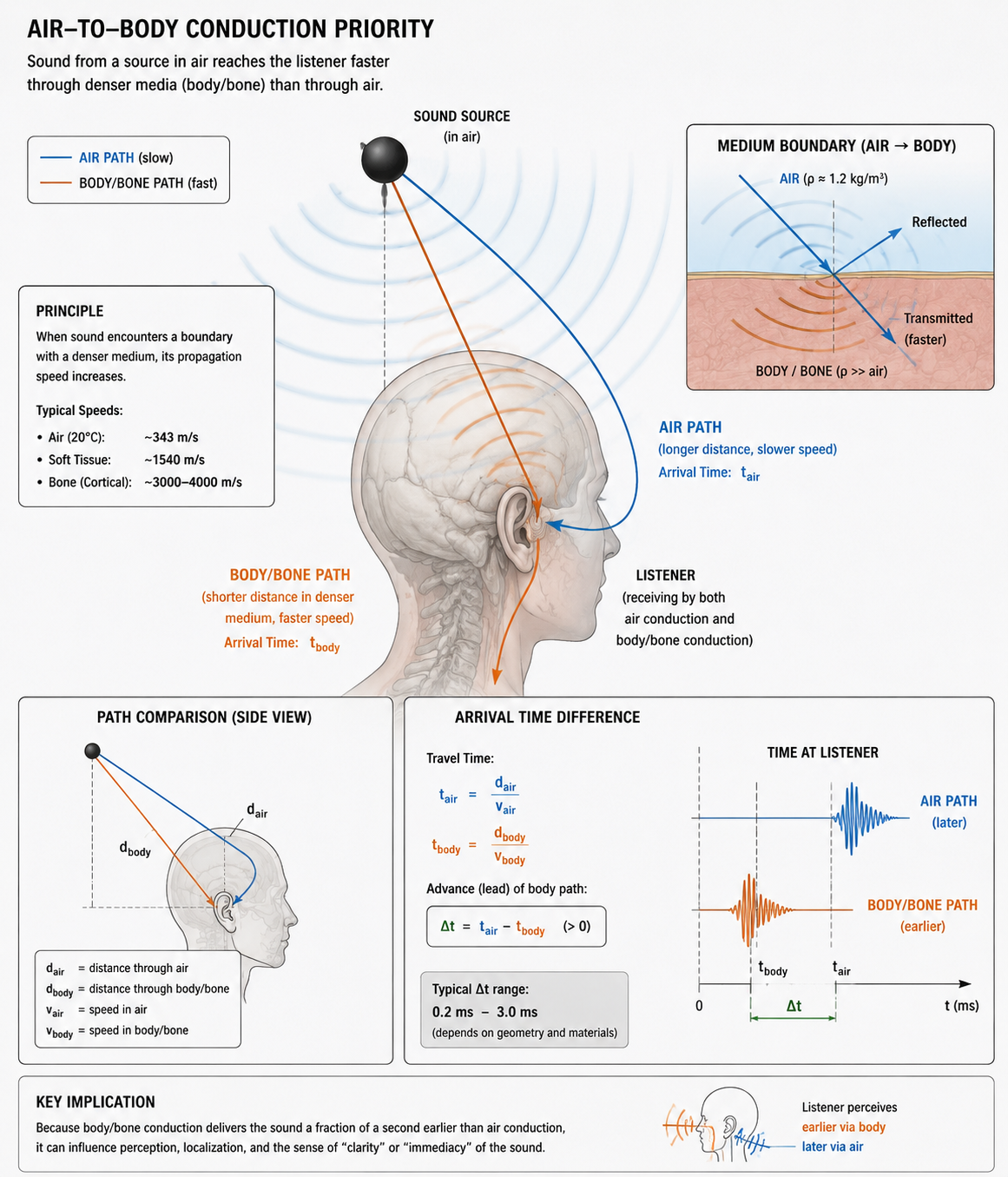
Grounding within the TASS ecosystem proposes that perception emerges from the combined interaction of multiple acoustic vectors. It is the distinction between mid/high articulation (topography) and low-frequency anchoring (foundation).
Visualizing the critical arrival time difference (Δt) where bone-conducted energy precedes air-conducted sound to establish a perceptual lead.
The Role of Low-Frequency Energy
The framework posits that low-frequency importance is derived from large wavelength behavior and structural coupling. These waves act as the "glue" of the acoustic scene.
trending_up Observed Behaviors
Listeners consistently report increased:
trending_down Negative Trends
When low-frequency coherence is reduced:
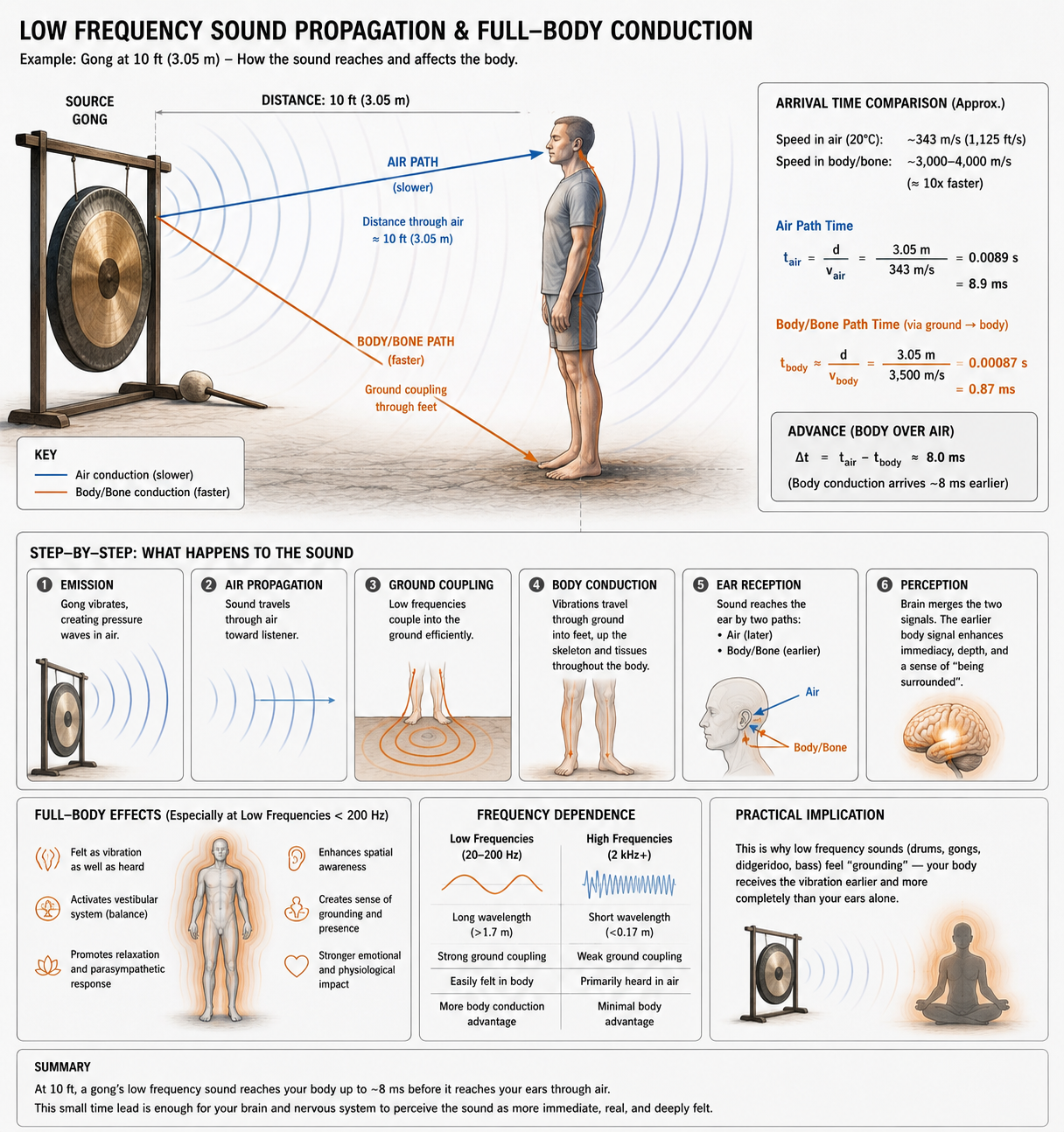
Fig 2.1: Full-Body Conduction & Grounding Mechanics
The 'Perceptual Anchor': Low-frequency energy couples with the ground and skeletal structure to create a stable acoustic foundation.
Contrast with Mid/Highs
While the grounding layer provides mass, higher frequencies are responsible for the "topography" of the sound.
The Perceptual Anchor
How low-frequency propagation stabilizes the interpretation through room interaction, bodily vibration, and pressure continuity. Without this anchor, spatialized sound feels "detached" or ghostly.
Hypothesized Mechanisms
Low-frequency waves travel around obstacles, creating a more uniform pressure field throughout the space.
Direct coupling with the floor and seating allows for mechanical energy transfer to the listener's skeletal system.
Grounding occurs through the integration of tactile chest cavity resonance and auditory input.
The room itself acts as a resonator, reinforcing the listener's spatial presence within the volume.
Unlike high-frequency beams, low-frequency energy saturates the environment, providing a stable 'floor' for all other acoustic objects.
Scientific Approach & Variability
The TASS Grounding Framework is an evolving perceptual model informed by continuous experimentation. We acknowledge that room geometry—including standing wave patterns and modal distributions—dramatically affects the effectiveness of the model.
Physiological Variability
Biological differences in chest cavity resonance and bone density mean that grounding thresholds vary significantly between individuals. Hardware calibration must account for these deviations.
Timeline of Findings
Initial Subtraction Testing
March 2025Identification of the 'floaty' perception when low-frequency coherence is artificially reduced.
Structural Coupling Discovery
August 2025Verification of body-conduction as a primary contributor to perceived 'grounding' and 'physicality'.
Atmospheric Anchor Logic
January 2026Formalization of the multisensory timing convergence model for spatial stability.
Physical Parallel Delay (Δtp) Operation
April 2026Introduction of the 1.2ms–1.8ms ghost stream to achieve height perception.